Interactive Kiosks for Airports and Transportation Hubs in India
by Jasdeep Kohli
Interactive Kiosks for Airports and Transportation Hubs in India
by Jasdeep Kohli
For a passenger, the questions are usually similar. Where should I go first? Is my flight or train delayed or on time? Which gate or platform should I head to? What way should I take to get there? Where can I find an amenity?
If these answers are difficult to find in a transport action hub, then this can quickly cause crowding and pressure on the frontline staff.
The best way for a transportation hub to resolve these common issues is by implementing an airport interactive kiosk, digital wayfinding, and real-time passenger information systems that work together. The objective is not just to add more screens, but it’s how to make information easy to access and make the overall journey of the passenger a more seamless experience.
Why Interactive Kiosks Matter in High-traffic Transportation Environments
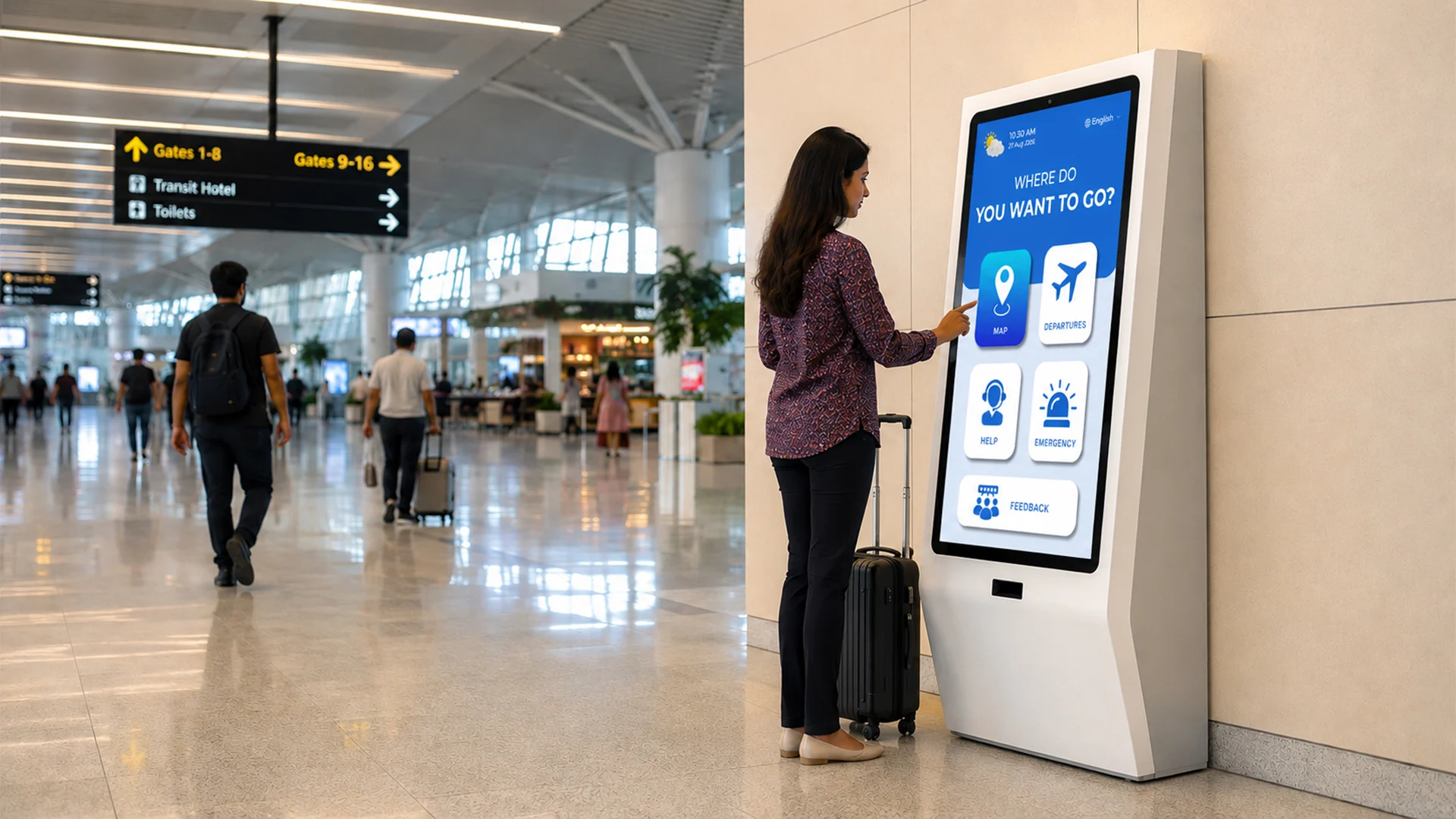
As compared to a traditional display that shows the same message to everyone, interactive kiosks offer passengers an on-demand information point. A transportation interactive kiosk gives passenger the freedom to browse through information that’s relevant to their own unique journey:
- Search for a destination, gate, shops or amenities.
- Explore interactive maps that can give them step-by-step wayfinding.
- Check out real-time schedules, service information, or journey updates.
- Access information in multiple languages where required.
- Get instant support with a customer service agent via video call.
For Indian transportation hubs serving large and diverse passenger volumes, self-service access can be useful as this gives passengers another way to find information, at the same time, it allows staff to focus on situations that genuinely require assistance.
Digital Wayfinding: Helping Passengers Move with Confidence
Traditional signs remain important, but they aren’t capable of answering every passenger’s unique queries as compared to a digital wayfinding kiosk that can help them identify their current location, find a destination and get the best route to reach it. The experience can also include most accessible routes, estimated walking times, nearest facilities and location specific details.
The value is straightforward: good wayfinding reduces uncertainty. In a transportation environment, that can translate into smoother passenger movement and a better overall experience.
Interactive Kiosks | FIDS | PIDS: How They Work Together
One part of the passenger information ecosystem is the interactive kiosks while Flight Information Display Systems (FIDS), Passenger Information Display Systems (PIDS), digital signage and wayfinding each solve a different communication need.
What Should Indian Transportation Operators Look For?
For airports, railway stations and other large transportation environments, choosing a kiosk or signage platform is not simply a question of screen design. The underlying system must operate reliably at scale.
- 24/7 reliability: passenger information cannot depend on systems that frequently require manual intervention.
- Centralised management: content and devices should be manageable across multiple screens, terminals or locations.
- Real-time integration: the platform should be able to work with live operational and passenger information sources where required.
- Multilingual experiences: content should reflect the language requirements of the passengers being served.
- Remote management and monitoring: Teams can check device health ad performance anywhere they are.
- Scalable: As the platform grows, it can be scaled to a much larger network easily.
- Role-based control: different teams may need different permissions for content, operations and administration.
- Flexible content experiences: information should be adaptable to the location, context and purpose of each touchpoint.
From Individual Screens to A Connected Passenger Experience
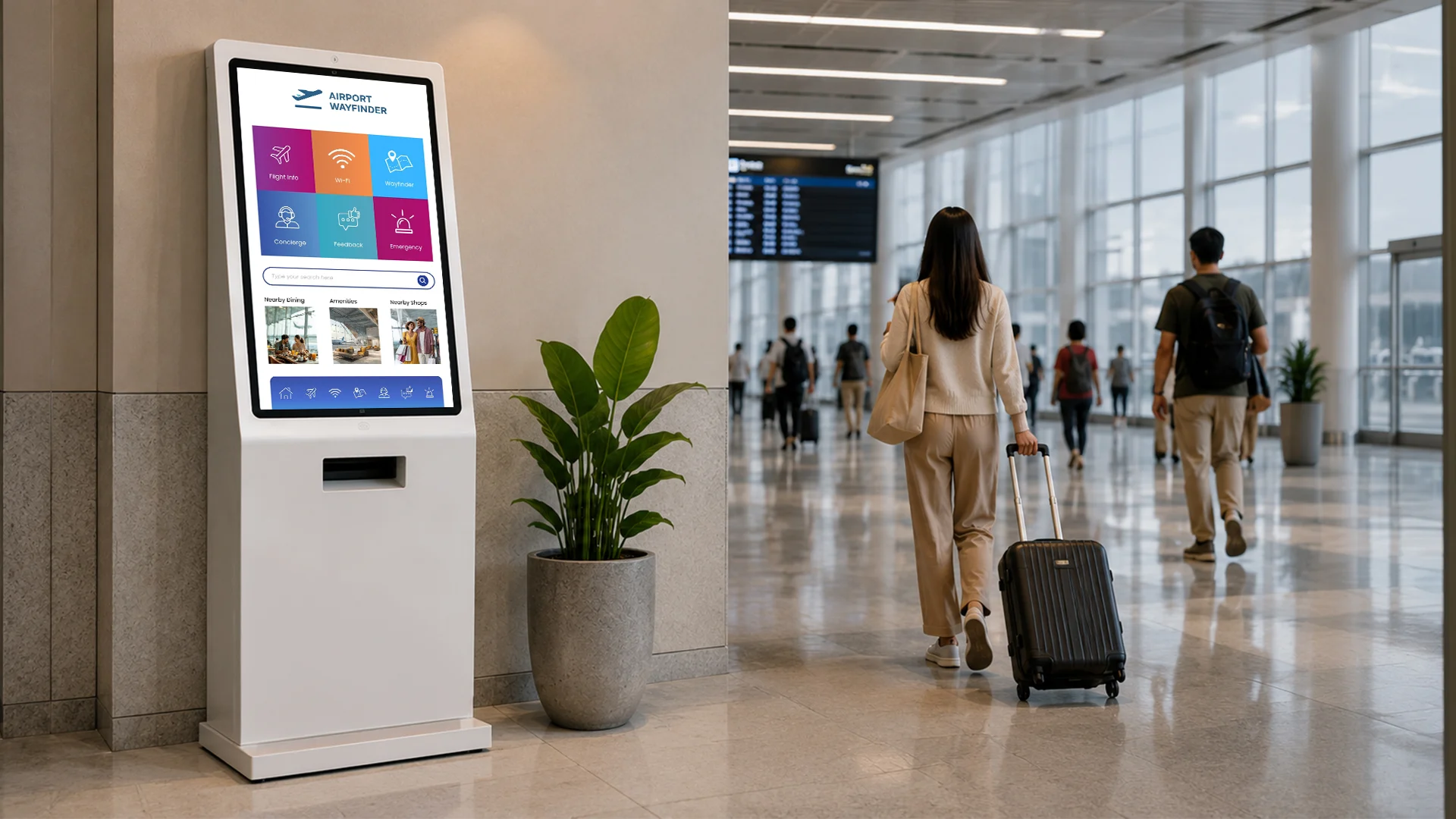
The conversation around transportation technology is moving beyond individual displays. Passengers do not think in terms of kiosks, FIDS, PIDS or content management systems. They experience one journey.
For operators, the opportunity is therefore to connect these touchpoints so that information remains consistent, current and useful throughout that journey. This can also make it easier for operational teams to manage content and communication across a complex environment.
How To Support Transportation Environments
For transportation operators, the focus is on creating a platform that can support real-time communication, centralised management and scalable deployment across passenger touchpoints. STRATACACHE Asia-Pacific brings together digital signage, interactive experiences and content management capabilities for enterprise environments.
Based on the transportation hub requirements, a broader digital ecosystem can include interactive kiosks, digital wayfinding, FIDS, PIDS and other passenger-facing experiences, rather than just disconnected screens.
As India’s transportation infrastructure will grow further, the question is no longer whether passengers need more digital touchpoints, but the more important question is whether these digital touchpoints make the journey seamless?
For airports, railway stations and other transit operators, this is where connected digital experiences can create real value, by helping passengers find the right information in the right place and exactly at the right time.
To learn more about interactive kiosks for airports and transportation hubs in India, visit stratacache-apac.com
Frequently Asked Questions
1. What is a transportation interactive kiosk?
A transportation interactive kiosk is a self-service touchpoint that helps guide passengers with maps, directions, schedules, real-time transport schedules and other content.
2. How can interactive kiosks improve passenger flow?
When interactive kiosks are implemented in the right areas, it can help reduce information-related lines and improve wayfinding. This helps passengers make faster decisions about where to go next.
3. What is the difference between FIDS and PIDS?
A Flight Information Display System (FIDS) displays live flight information such as arrivals, departures, gates and flight status and a Passenger Information Display System (PIDS) is used across transportation environments to communicate schedules, platforms, route changes, service updates and alerts.
4. Are digital wayfinding kiosks useful in airports?
Yes. In large terminals, digital wayfinding kiosks can help passengers search for gates, facilities and services, identify a route to their destination and even get live assistance through a video call with a customer agent.
5. What should transportation operators consider before deploying interactive kiosks?
Operators should consider reliability, real-time data integration, centralised management, multilingual requirements, accessibility, remote monitoring, security, scalability and how the kiosks will connect with the wider passenger information ecosystem.
About the Author:
Jasdeep Kohli, Vice President Marketing – APAC at STRATACACHE, leads brand, product, and growth marketing across Asia-Pacific. He shares his cross-functional expertise in marketing, branding, business strategy, and has played a pivotal role in elevating STRATACACHE’s market leadership across the region. Jasdeep is passionate about retail innovation and customer experience, constantly pushing for agile, tech-driven strategies that keep the brand ahead in today’s fast-evolving digital landscape. He believes in continuous learning, staying curious, and evolving with the industry to drive lasting impact and growth.