Interactive Wayfinding for Malls, Hospitals and Corporate Campuses in Singapore
by STRATACACHE Asia-Pacific Team
Interactive Wayfinding for Malls, Hospitals and Corporate Campuses in Singapore
by STRATACACHE Asia-Pacific Team
Static maps get outdated quickly with the changes in store locations; static signs may not always be clear or visible, and the need to ask for directions every few minutes is not ideal for visitors or staff.
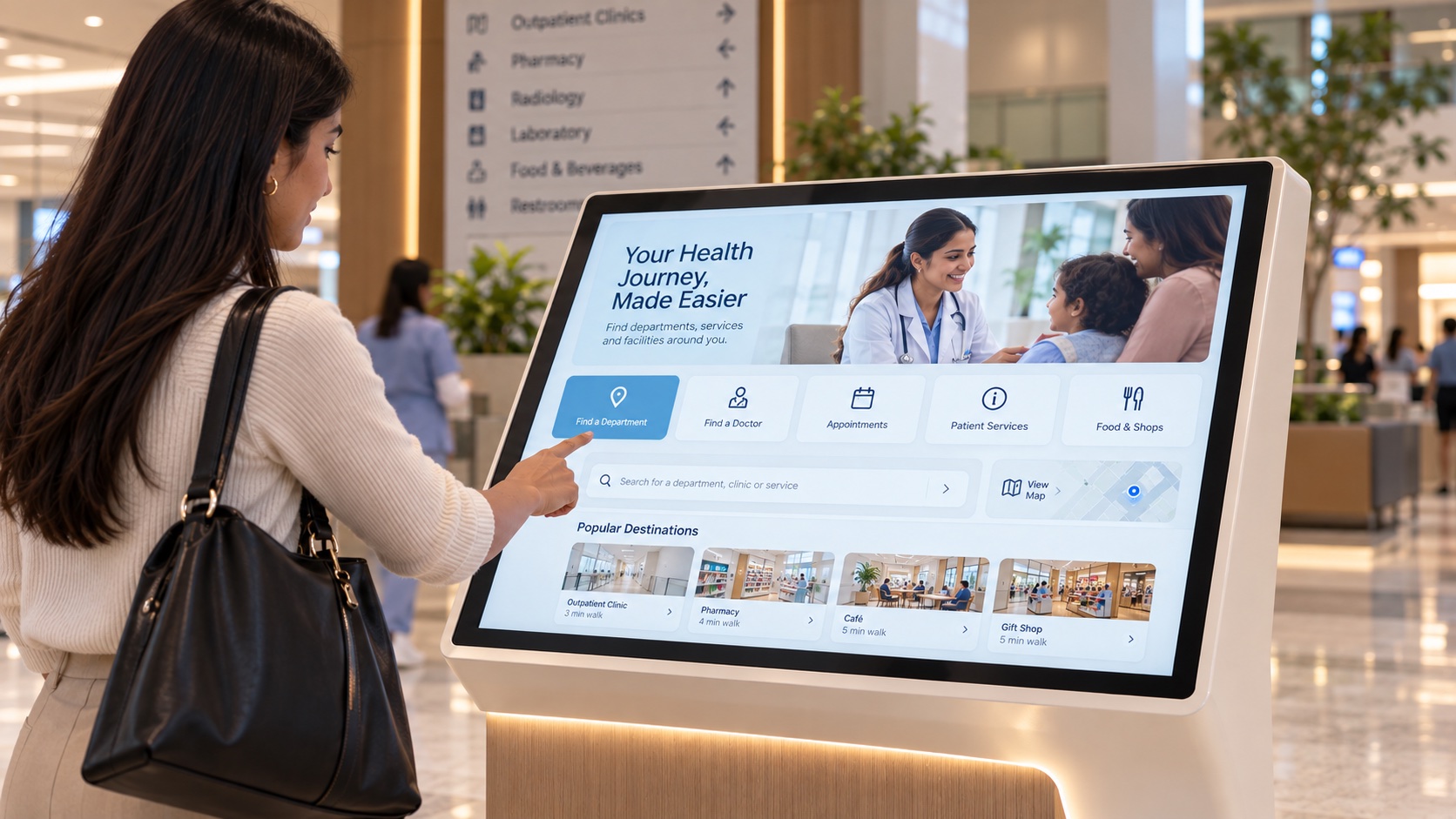
This is exactly where interactive wayfinding solutions are making a real difference. Instead of relying on printed directories or fixed signs, modern digital wayfinding kiosks allow everyone to have access to touch-based maps, smart search and step-by-step route guidance. These help visitors find what they need faster, while giving organisations a centralised way to manage information across multiple locations.
Why Wayfinding Matters in Singapore’s Large Spaces
For malls, hospitals and corporate campuses, the right wayfinding system does more than point people in the right direction. It improves the overall experience, reduces pressure on reception and information desks. It can even create new opportunities for engagement and revenue.
Singapore has some of the most complex built environments in the region: multi-level shopping malls, integrated developments, large hospital clusters, education campuses and sprawling corporate parks.
For first-time visitors, these spaces can feel overwhelming and these are just some of the challenges:
- Struggling to locate specific stores, clinics or offices.
- Confusion over multiple levels, wings and blocks.
- Peak-hour congestion at information desks.
- Frequent changes in tenancy, services or room allocations.
Traditional static maps simply cannot keep up with the amount of people in these large spaces, a mall wayfinding digital display or hospital directory printed on a board cannot reflect real-time changes such as a new pop-up store, a relocated clinic or a temporarily closed corridor. This is where interactive wayfinding technology offers a clear advantage.
What is Interactive Wayfinding?
Interactive wayfinding is a navigation system that helps people move through large spaces using touchscreens, kiosks or mobile integration. Instead of a fixed map, users interact with a live, searchable interface that can:
- Show their current location.
- Suggest the best route to a destination.
- Offer options such as lifts, escalators or wheelchair-accessible paths.
- Display real-time updates on events, closures or announcements.
- Support multiple languages and accessibility needs.
A well-designed wayfinder for hospitals, malls or campuses turns navigation from a source of stress into a seamless part of the visitor journey.
How Interactive Wayfinding Works in Practice
Most digital wayfinding kiosks follow a simple, intuitive flow:
- Welcome screen – Shows branding, key information or promotions when idle.
- Search or browse – Users can search by name, category or browse a directory.
- Location selection – The system highlights the chosen destination on the map.
- Route guidance – A step-by-step path is shown, often with distance and estimated time.
- Optional mobile handoff – Users scan a QR code to continue navigation on their phone.
This process can be customised for different environments. A retail store wayfinder solution can focus on brands, promotions and store locations. A wayfinder for hospitals would prioritise departments, clinics, labs and visitor facilities. A campus wayfinding system could cover multiple buildings, faculties, libraries and support services.
Use Cases Across Key Environments
Shopping malls and retail developments
In malls, mall wayfinding digital displays help shoppers:
- Find specific stores, F&B outlets and services.
- Discover promotions, events and new tenants.
- Locate lifts, restrooms, nursing rooms and prayer rooms.
- Access parking information and exits.
- Interactive screens can also double as advertising surfaces when idle, showcasing dynamic content and promotions to increase engagement and revenue.
Hospitals and healthcare facilities
Hospitals are among the most complex environments to navigate. A wayfinder for hospitals can:
- Guide patients to clinics, departments, labs and pharmacies.
- Show visiting hours, service counters and key facilities.
- Support multiple languages for patients and visitors.
- Reduce repetitive questions at information desks and reception.
- For large hospital clusters, a smart wayfinding system can be deployed across multiple blocks and levels, with centralised content management to keep information accurate.
Corporate Campuses and Office Buildings
In corporate environments, interactive navigation solutions support:
- Visitor check-in and guidance to meeting rooms.
- Directory searches for companies, departments and employees.
- Integration with room booking and visitor management systems.
- Emergency evacuation routes and safety information.
- A corporate wayfinding kiosk in the lobby can create a professional first impression while reducing the load on reception staff.
Universities and Education Campuses
For universities, a wayfinder for universities helps students and visitors:
- Locate faculties, lecture halls, libraries and admin offices.
- Find event venues, examination halls and student services.
- Navigate large, multi-building campuses with confidence.
- This is especially useful during orientation, open houses and examination periods when footfall is high.
Key Features of a Modern Wayfinding Solution
When you are ready to implement a wayfinding system, remember that not all wayfinding systems offer the same capabilities. When evaluating interactive wayfinding Singapore options, you can look out for the following features.
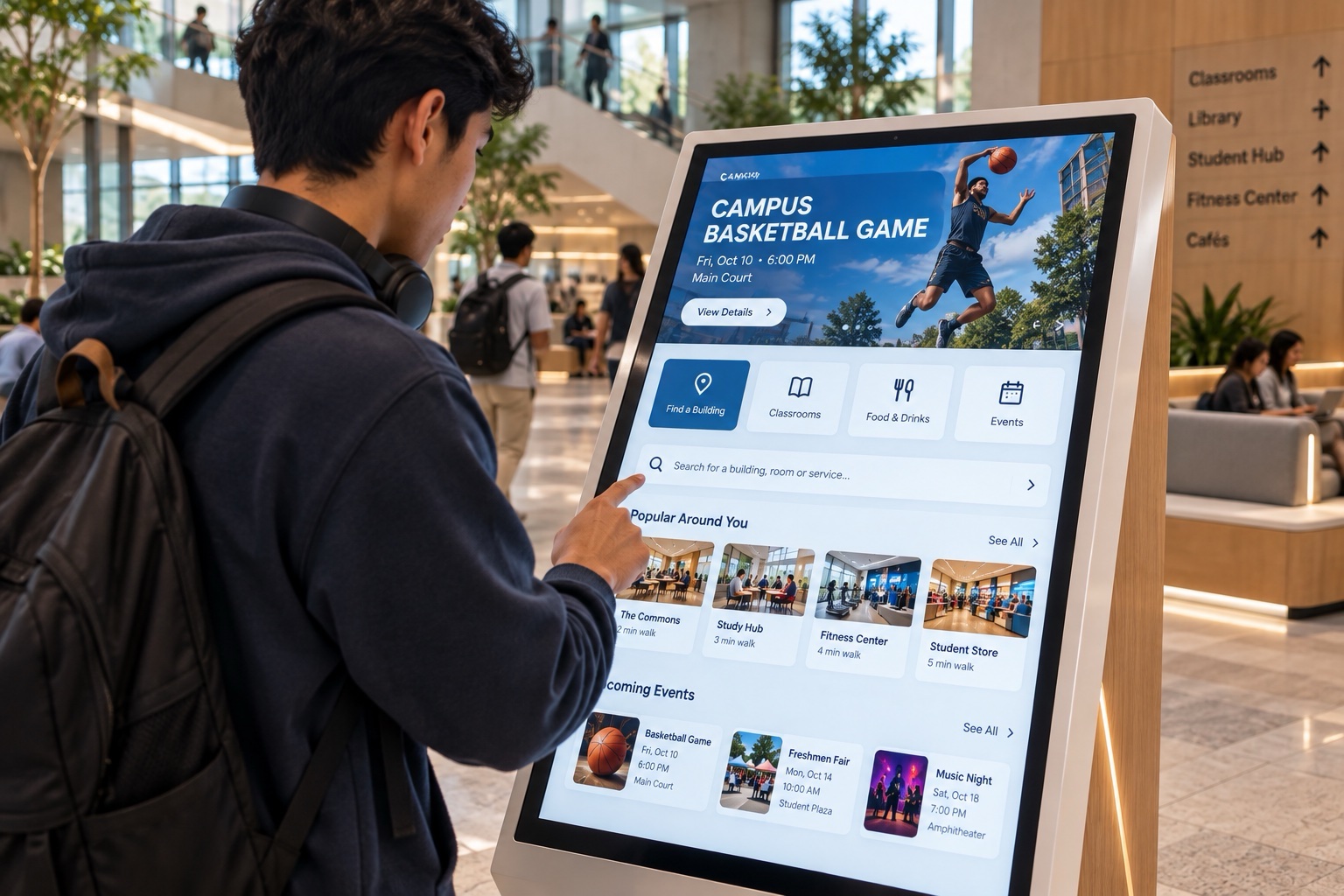
Smart search with auto-suggestions – Users should be able to find locations quickly using name or category search, enhanced by auto-suggestions and predictive text. This reduces typing effort and improves accuracy, especially on busy touchscreens.
Route optimisation – The system should guide users to the fastest or most convenient routes, with options such as lifts, escalators, stairs or accessible paths. This is critical in multi-level malls, hospitals and campuses.
Multi-language support – Singapore serves a diverse audience, including locals, tourists and international students or employees. Multi-language support ensures that wayfinding is accessible to everyone.
Ad display mode – When idle, screens can switch to an advertising mode to showcase dynamic content, promotions or announcements. This turns idle time into a revenue opportunity and keeps the screen visually engaging.
QR code navigation – For users who prefer mobile navigation, QR code support allows them to scan a code and continue the route on their phone without downloading an app.
Benefits for organisations and visitors implementing digital wayfinding kiosks delivers advantages on both sides.
For visitors:
- Faster, clearer navigation with step-by-step guidance.
- Reduced stress and confusion in large or unfamiliar spaces.
- Access to real-time updates on events, closures and announcements.
- Multi-language support for greater accessibility.
- Option to continue navigation on mobile via QR code.
For organisations:
- Lower reliance on printed maps and static directories.
- Reduced pressure on information desks and reception staff.
- Centralised content management for real-time accuracy.
- Ability to promote events, services and tenants dynamically.
- New revenue streams through advertising on idle screens.
Whether you need a retail store wayfinder solution, wayfinder for hospitals, mall wayfinding digital displays, wayfinder for universities or a campus wayfinding system, STRATACACHE Asia-Pacific can tailor the solution to your environment and visitor needs.
Businesses that implement digital wayfinding kiosks with smart search, route optimisation, multi-language support and centralised management, can help create a smoother, more confident visitor experience. For businesses ready to upgrade their current signage or implement a new smart wayfinding system, the focus should be on usability, integration and long-term scalability.
If your organisation is exploring interactive navigation solutions or looking to improve visitor guidance across your premises, visit stratacache-apac.com
Frequently Asked Questions
1. What is interactive wayfinding Singapore?
It is a digital navigation system that uses touchscreens and kiosks to help visitors find their way around large spaces such as malls, hospitals and campuses with real-time, interactive maps.
2. How do digital wayfinding kiosks improve visitor experience?
They provide clear, step-by-step directions, smart search and real-time updates, reducing confusion and helping people locate destinations faster without relying on staff or printed maps.
3. Can wayfinding systems support multiple languages?
Yes. Modern smart wayfinding system solutions offer multi-language support to cater to Singapore’s diverse audience, including locals, tourists and international visitors or employees.
4. Where can interactive navigation solutions be used?
They can be used in shopping malls, hospitals, corporate campuses, universities, airports and other large facilities where clear navigation and real-time information are important.
5. How does STRATACACHE Asia Pacific’s Wayfinder generate additional value?
Through ad display mode, idle screens can showcase dynamic content and promotions, turning unused screen time into a new revenue stream while keeping the interface engaging for visitors.
About the Author:
STRATACACHE Asia-Pacific digital signage experts share their experience and thoughts in our blog to provide practical tips and advice for real-world applications. Our team aims to offer interesting content through a variety of formats including long form articles, video logs, interviews and infographics.