What Is a Queue Management System and Why Do Singapore Businesses Need It?
by STRATACACHE Team
What Is a Queue Management System and Why Do Singapore Businesses Need It?
by STRATACACHE Team
In this blog, let’s explore how a queue management system can improve business needs, what benefits it offers and how it can help Singapore businesses improve their customer service.
What is a Queue Management System?
A Queue Management System allows customers to get a queue number, check what their place is in the queue, how long it will take for it to be their turn and even get mobile notifications or alerts when it’s almost their turn. This way, customers can get a queue ticket and proceed to other errands while waiting for their turn.
To help improve operational performance, staff can manage service points from a central interface while the team can get useful data to make data-driven decisions in improving wait times and operational efficiency.
Depending on the business, customers may join the queue through:
- A self-service queue management kiosk.
- A QR code scanned with a mobile phone.
- A website or mobile application.
- A staff-assisted registration point.
- An appointment or reservation system.
A Queue Management System in Singapore organisations may be particularly valuable in locations where customer volumes change throughout the day. It gives operators more control over busy periods without requiring customers to remain in a crowded waiting area.
How Does a Queue Management System Work?
Although queue systems can be customised for different industries, the basic process is usually straightforward.
1. Customer check-in
The customer registers for a service using a kiosk, QR code, mobile device or staff member. They may select a department, service type or preferred counter. In a hospital, for example, this could be registration, pharmacy or a specific clinic. In a bank, the options may include account services, loans or general enquiries.
2. Queue ticket or digital position
The system provides a queue number, position or estimated waiting time. This allows the customer to have a clear understanding of what happens next.
3. Real-time updates
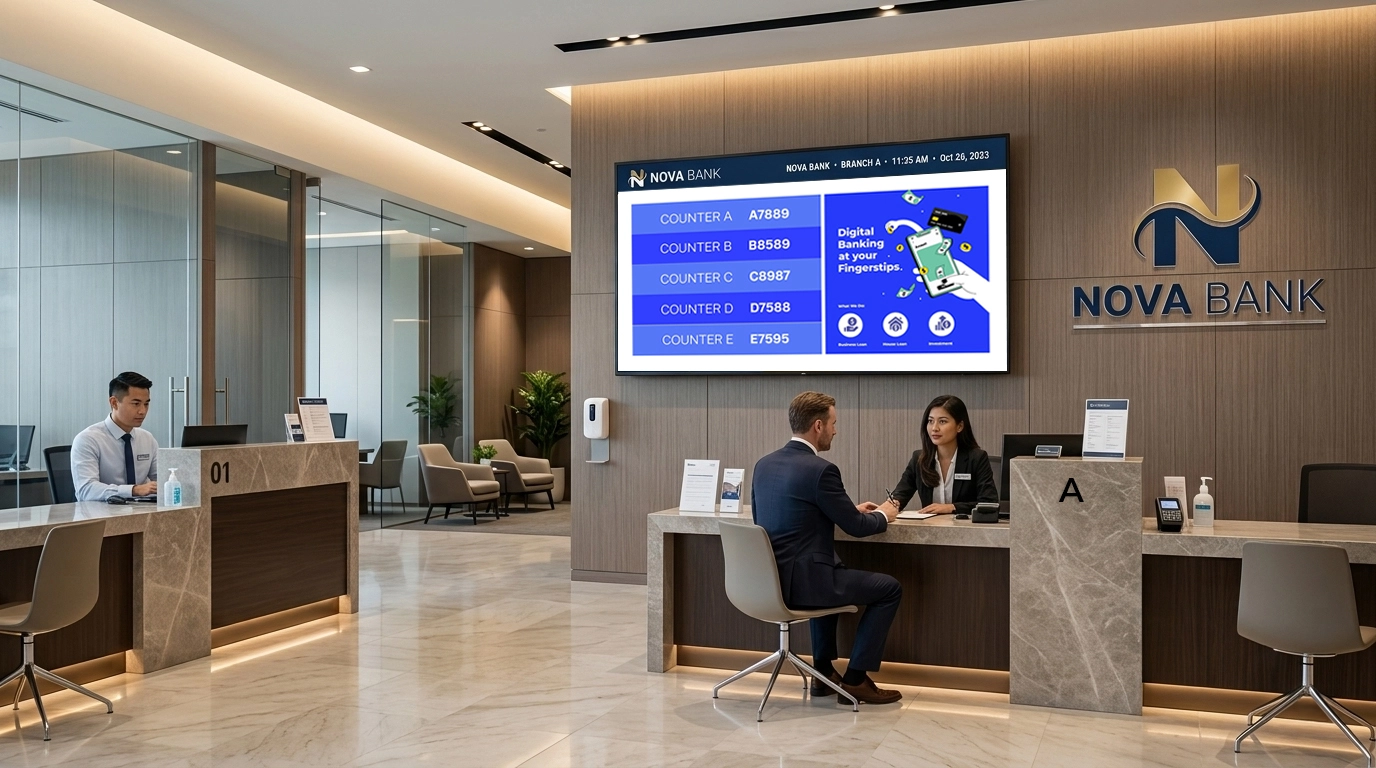
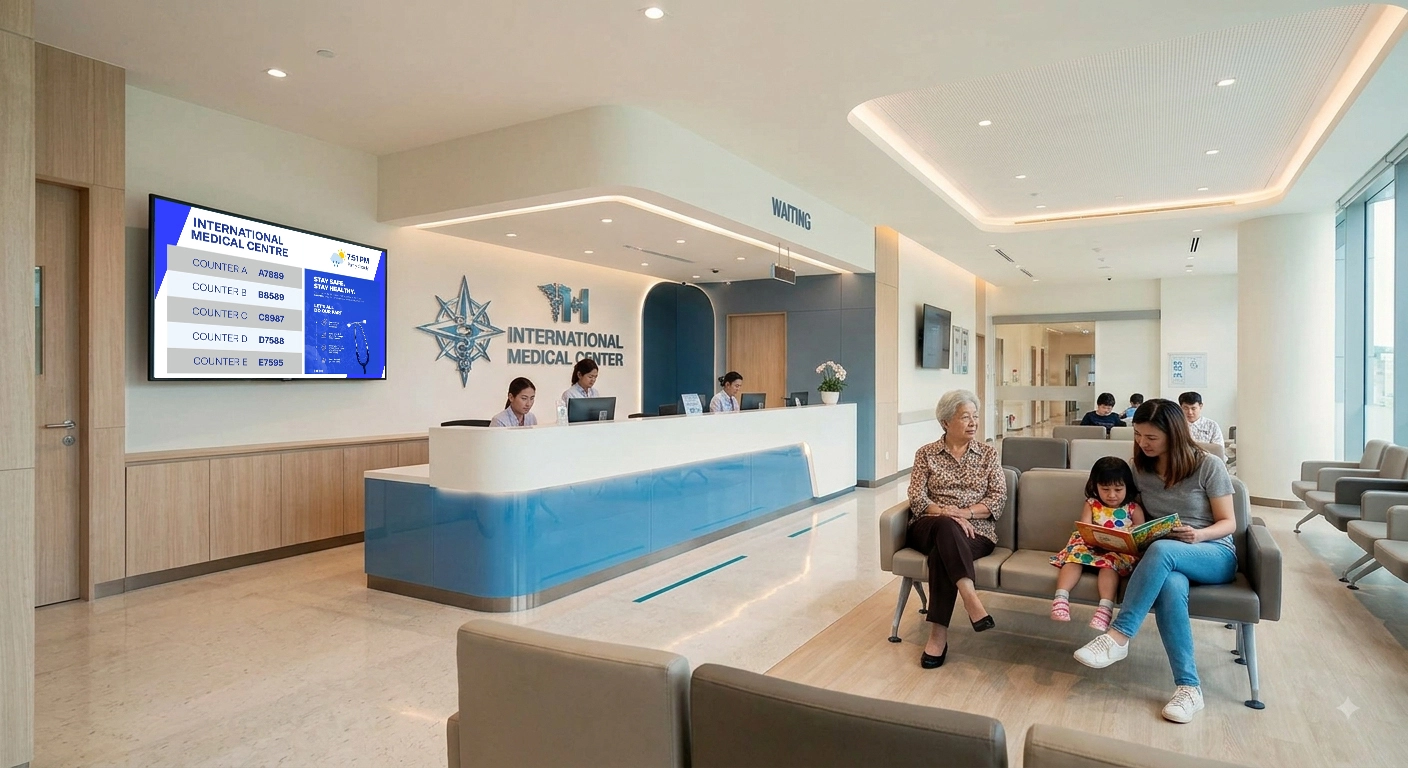
Queue information can be displayed on digital screens throughout the venue. The system may show the next number, the counter or room assigned to the customer, and any important service messages.
4. Mobile notifications
Customers choose to receive SMS or app-based notification when it’s almost their turn and allows them to do other errands nearby rather than just standing in line.
5. Staff control
Staff use a web-based interface to call, skip or reassign customers. They can also manage multiple departments, counters or service points from one system.
6. Reporting and analysis
Managers can review data such as average waiting time, service duration, queue volume, no-shows and peak periods. These insights can help businesses adjust staffing and improve service planning.
STRATACACHE’s queue management solution combines self-service kiosks, digital displays, queue management software, optional mobile notifications and analytics to support this end-to-end process. Its official Singapore solution page positions the system around improving customer flow, reducing wait times and enhancing satisfaction.
Benefits for Singapore Businesses
The main reason businesses invest in queue technology is to make waiting more manageable. However, the benefits extend beyond reducing the length of a physical line.
Reduce perceived and actual waiting times
Customers are generally more comfortable waiting when they understand how long the process may take. A queue display with live updates provides visibility and helps reduce the frustration caused by uncertainty.
Mobile notifications can improve the experience further by allowing customers to move around while they wait. This can minimise crowding and give people more freedom, particularly in busy branches, clinics, restaurants and retail spaces.
Improve Customer Satisfaction
A clear queue process makes the service environment feel more organised.
This particularly an important feature in Singapore, where businesses serve customers who value efficiency. An efficient queue system can create a calmer experience as soon as a customer arrives.
Better Staff Productivity
Manual queue management can take up valuable staff time. Employees may need to answer repeated questions, distribute paper tickets, direct customers to the right counter or monitor several waiting areas.
Automation helps reduce tasks which allows staff to focus serving customers than managing the line and supervisors can see queue activity across departments in real time.
Create Customer Engagement
While customers are waiting, digital displays can show service information. New products, news, or entertainment.
For example, a bank can promote a new savings product, a healthcare provider can show preparation instructions or health information. When the content displayed is relevant to the audience, queue displays can support communication and engagement.
What To Look for When Choosing a Queue Management System
Not every queue management solution offers the same features. Singapore businesses should consider the following factors before deciding.
Self-service options
Look for kiosks or digital registration tools that are simple to use. Customers should be able to select a service quickly without needing extensive assistance.
Digital signage integration
The system should work with displays that show queue numbers, counter details, service messages and estimated waiting times. Digital signage integration helps ensure that customers receive consistent information across the venue.
Mobile notifications
SMS, app or other mobile alerts allow customers to wait more flexibly. Consider which notification channels suit your audience and whether the system can support different notification preferences.
Analytics and reporting
Queue data should be accessible through clear reports and dashboards. Useful metrics include average waiting time, service time, queue abandonment, peak periods and staff performance.
Scalability and customisation
The solution should be able to support different departments, counters and customer journeys as the business grows. It should also allow workflows to be customised for different locations or industries.
Integration capability
A queue system may need to work with appointment platforms, customer relationship management tools, digital signage networks or existing business systems. Integration can reduce manual processes and create a more connected operation.
A Queue Management System for Singapore businesses helps transform waiting time from a source of frustration into a more organised part of the customer journey. By combining self-service registration, real-time queue displays, mobile notifications and analytics, businesses can reduce congestion, improve staff efficiency and deliver a more predictable service experience.
Implementing the right queue management solution should be customised to your environment and customer needs, whether you manage a bank, healthcare facility, restaurant, retail outlet or public service centre. Get in touch with STRATACACHE APAC to explore how a connected queue management system can help elevate the customer experience.
Frequently Asked Questions
1. . What is a a Queue Management System?
It is a digital solution that helps businesses organise customer queues through kiosks, QR codes, digital displays, mobile notifications and queue management software.
2. How does a Queue Management System reduce waiting times?
It helps businesses manage customer flow more efficiently, identify areas with long waiting time and allocate staff according to demand. Customers can also wait away from the physical queue while receiving real-time updates.
3. Can a Queue Management System support multiple branches?
Yes. Organisations can manage different branches, departments and service points through a centralised system with a multi-location queue management system.
4. Which industries can benefit from a queue management system?
Banks, hospitals, restaurants, retail stores, government service centres and other businesses with regular customer queues can benefit from a queue management system.
5. What features should businesses look for?
When a business is ready to implement a Queue Management System, they should look for real-time dashboards, digital signage integration, self-service kiosks, customisable workflows and easy integration with existing systems.
About the Author:
STRATACACHE digital signage experts share their experience and thoughts in our blog to provide practical tips and advice for real-world applications. Our team aims to offer interesting content through a variety of formats including long form articles, video logs, interviews and infographics.